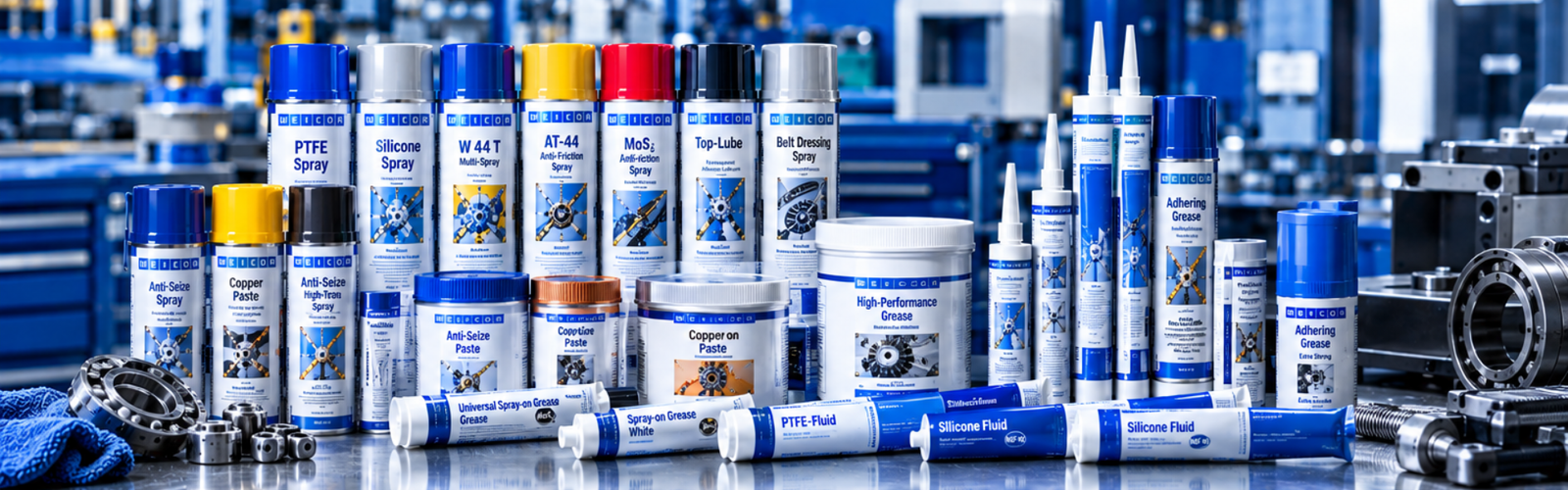
Industrial Lubricants: Complete Guide to Types, Applications & Selection
Admin
|
13 Oct 2026
|
11 min read
|
4 views
Industrial Lubricants: Complete Guide to Types, Applications & Selection
Industrial machinery contains countless moving components that operate under friction, pressure, load and temperature.
Bearings rotate. Chains move. Gears mesh. Shafts turn. Bushes slide. Conveyors operate continuously.
Without suitable lubrication, these components can experience increased friction, heat and wear.
This is why industrial lubricants are an essential part of equipment maintenance across manufacturing, engineering, automotive, construction, processing and other industrial environments.
But choosing an industrial lubricant is not as simple as selecting any oil or grease.
Different machinery requires different lubrication properties. The right product depends on factors such as:
- Equipment type
- Component design
- Operating temperature
- Load
- Speed
- Friction
- Moisture
- Dust
- Chemical exposure
- Material compatibility
- Manufacturer recommendations
This complete guide explains industrial lubricants, their major types, applications, selection criteria, maintenance practices and common mistakes to avoid.
What Are Industrial Lubricants?
Industrial lubricants are products designed to reduce friction, wear and heat between moving or contacting surfaces in industrial equipment.
Depending on their formulation and application, lubricants may also help with:
- Corrosion protection
- Heat dissipation
- Sealing
- Noise reduction
- Contamination control
- Component protection
Industrial lubricants can be supplied in different forms, including:
- Oils
- Greases
- Aerosol sprays
- Pastes
- Dry-film lubricants
- Specialty lubricants
The correct lubricant should always be selected for the specific application.
Why Is Industrial Lubrication Important?
Friction is unavoidable when surfaces move against each other.
However, uncontrolled friction can contribute to:
- Component wear
- Heat generation
- Energy losses
- Noise
- Surface damage
- Premature equipment failure
A suitable lubricant creates a lubricating film between surfaces, helping reduce direct contact.
This can support more reliable machinery operation and make lubrication an important part of preventive maintenance.
What Does an Industrial Lubricant Do?
Depending on the product, industrial lubricants can perform several functions.
Reduce Friction
Lubrication helps surfaces move more smoothly against each other.
Reduce Wear
A suitable lubricant can help protect components from excessive surface contact and wear.
Control Heat
Lubrication can help manage heat generated by friction in appropriate applications.
Protect Against Corrosion
Some lubricants also provide corrosion-protection properties.
Reduce Noise
Proper lubrication can reduce friction-related noise in suitable mechanical systems.
Extend Maintenance Intervals
The appropriate lubricant and maintenance schedule can support longer component service life, subject to equipment and manufacturer requirements.
Main Types of Industrial Lubricants
Industrial lubricants can be broadly divided into several categories.
1. Industrial Oils
Industrial oils are commonly used in applications where liquid lubrication is appropriate.
They may be used for:
- Gears
- Bearings
- Hydraulic systems
- Compressors
- Chains
- Circulating systems
- Mechanical equipment
The required oil depends on the equipment and operating conditions.
Important considerations include:
- Viscosity
- Temperature
- Load
- Speed
- Chemical compatibility
- Manufacturer specifications
2. Industrial Grease
Industrial grease is a semi-solid lubricant consisting of a lubricating fluid combined with a thickener and other additives.
Grease can be useful where the lubricant needs to remain in place.
Common applications include:
- Bearings
- Bushes
- Hinges
- Gears
- Mechanical assemblies
- Chassis components
Different greases are formulated for different operating conditions.
3. PTFE Lubricants
PTFE-based lubricants are commonly used where low-friction performance is required.
They may be suitable for:
- Sliding surfaces
- Guides
- Bushes
- Mechanisms
- Plastic components
- Precision assemblies
PTFE sprays are particularly useful where a clean, low-friction lubrication solution is required for an appropriate application.
4. Silicone Lubricants
Silicone lubricants can be useful for applications involving suitable:
- Plastics
- Rubber
- Seals
- Gaskets
- Sliding components
They can also provide water-repellent properties depending on the formulation.
Silicone lubricants should be selected based on the material and application rather than simply because they are labelled as multi-purpose.
5. Chain Lubricants
Industrial chains require appropriate lubrication to operate smoothly.
Chain lubrication can help manage:
- Friction
- Wear
- Noise
- Heat
Applications include:
- Conveyor systems
- Production machinery
- Industrial drive systems
- Packaging machinery
The correct chain lubricant depends on chain speed, temperature, load and operating environment.
6. High-Temperature Lubricants
Some industrial equipment operates in high-temperature environments.
Examples include:
- Ovens
- Furnaces
- Heating equipment
- Industrial processing machinery
- Machinery exposed to heat sources
High-temperature lubricants are formulated for applications where ordinary lubricants may not provide the required performance.
Always check the manufacturer's specified temperature range.
7. Penetrating Lubricants
Penetrating products are designed to assist with components that are:
- Rusted
- Corroded
- Seized
- Difficult to move
Common applications include:
- Nuts
- Bolts
- Fasteners
- Hinges
- Mechanical assemblies
A penetrating lubricant should not automatically be considered a substitute for a dedicated long-term lubricant.
8. Dry-Film Lubricants
Dry-film lubricants provide lubrication without necessarily leaving the same type of wet film associated with conventional oils and greases.
They can be useful in selected applications where:
- Dust attraction needs to be minimised
- A dry surface is preferred
- Clean operation is important
Application suitability depends heavily on the product and operating conditions.
Industrial Lubricants by Application
The correct lubricant depends heavily on the component being lubricated.
Bearings
Bearings are among the most common industrial lubrication applications.
Incorrect lubrication can result from:
- Wrong lubricant
- Excessive lubricant
- Insufficient lubricant
- Incorrect lubrication interval
- Contamination
Always follow the bearing manufacturer's recommendations.
Chains
Chains require lubrication at appropriate intervals.
A suitable chain lubricant should be selected according to:
- Chain speed
- Temperature
- Load
- Environment
- Dust
- Moisture
Gears
Gears experience significant contact forces and require appropriate lubrication.
Gear lubrication can help manage:
- Friction
- Wear
- Heat
- Surface damage
The lubricant should be selected according to the gearbox or gear manufacturer's specifications.
Hinges
Hinges are relatively simple mechanical components but can still benefit from suitable lubrication.
Depending on the application, options may include:
- General-purpose lubricant
- PTFE lubricant
- Silicone lubricant
Bushes and Sliding Components
Sliding components can benefit from low-friction lubrication.
Depending on the material and application, PTFE-based lubricants may be considered.
Conveyor Systems
Conveyor systems can contain multiple lubrication points, including:
- Chains
- Bearings
- Rollers
- Drive components
A planned lubrication schedule can help maintenance teams keep these components in suitable operating condition.
How to Choose the Right Industrial Lubricant
Choosing the correct industrial lubricant begins with understanding the application.
1. Identify the Component
Determine whether you are lubricating:
- Bearing
- Chain
- Gear
- Bush
- Hinge
- Guide
- Shaft
- Conveyor component
- Mechanical linkage
2. Check the Operating Temperature
Temperature has a major influence on lubricant performance.
Consider:
- Normal operating temperature
- Minimum temperature
- Maximum temperature
- Temperature fluctuations
For high-temperature applications, select a product specifically designed for those conditions.
3. Consider the Load
Heavy loads may require lubricants with appropriate load-carrying properties.
The lubricant must be matched to the equipment's operating requirements.
4. Consider Speed
High-speed components can have different lubrication requirements from slow-moving, heavily loaded components.
Always check the manufacturer's recommendations.
5. Consider Moisture
Equipment exposed to water or humidity may require products with suitable water resistance or corrosion protection.
This can be particularly important in:
- Outdoor equipment
- Coastal environments
- Washdown areas
- Processing facilities
6. Consider Dust and Contamination
Some lubricants can attract dust or contaminants.
In dusty environments, selecting a suitable formulation can be important.
7. Check Material Compatibility
Determine whether the lubricant is compatible with:
- Metal
- Plastic
- Rubber
- Seals
- Coatings
- Composite materials
Industrial Lubricant Viscosity
Viscosity describes a fluid's resistance to flow.
For industrial oils, viscosity is an important selection factor.
A lubricant that is too thin may not provide the required film thickness under certain conditions.
A lubricant that is too thick may increase resistance and may not flow appropriately through the system.
This is why the correct viscosity should generally be selected according to the equipment manufacturer's specifications.
Industrial Lubrication and Preventive Maintenance
Lubrication should be part of a planned preventive maintenance program.
A basic process can include:
Inspect
Identify lubrication points and check for:
- Wear
- Leaks
- Contamination
- Corrosion
- Abnormal noise
Clean
Remove contamination before lubrication where required.
Apply
Apply the correct lubricant using the recommended method and quantity.
Inspect Again
Check for leaks, excess lubricant or abnormal operation.
Record
Document the maintenance activity.
Over-Lubrication vs Under-Lubrication
More lubricant does not necessarily mean better lubrication.
Under-Lubrication
Insufficient lubricant can contribute to:
- Increased friction
- Wear
- Heat
- Noise
- Component damage
Over-Lubrication
Excess lubricant can also cause problems in certain applications.
Potential issues may include:
- Heat generation
- Leakage
- Contamination
- Seal problems
- Equipment inefficiency
The correct amount depends on the component and lubricant.
How Often Should Industrial Equipment Be Lubricated?
There is no universal lubrication interval.
The appropriate frequency depends on:
- Equipment design
- Lubricant type
- Operating temperature
- Load
- Speed
- Environment
- Operating hours
- Manufacturer recommendations
Some equipment may require frequent lubrication, while sealed or specialised components may have different requirements.
Always follow the equipment manufacturer's maintenance instructions where available.
Manual vs Automatic Lubrication
Factories can use different lubrication methods.
Manual Lubrication
A technician applies lubricant at scheduled intervals.
Advantages include:
- Simple implementation
- Low initial investment
- Easy for smaller facilities
However, manual lubrication depends heavily on maintenance discipline and consistency.
Automatic Lubrication
Automatic lubrication systems deliver lubricant according to predefined requirements.
They can be useful for:
- Large machinery
- Difficult-to-access lubrication points
- Continuous operations
- Multiple lubrication points
The appropriate system depends on equipment requirements.
Common Industrial Lubrication Mistakes
Using the Wrong Lubricant
Different components require different products.
Mixing Incompatible Lubricants
Lubricants should not be mixed unless compatibility is confirmed.
Applying Too Much
Excess lubricant can create problems.
Applying Too Little
Insufficient lubrication can increase wear.
Lubricating Dirty Components
Contamination can interfere with lubrication.
Ignoring Temperature
A lubricant must be suitable for the operating environment.
Ignoring Manufacturer Specifications
Equipment manufacturers often specify particular lubricant types, grades or requirements.
Industrial Lubricants and Corrosion Protection
Some industrial lubricants can also provide corrosion protection.
This can be particularly useful where components are exposed to:
- Moisture
- Humidity
- Outdoor environments
- Storage conditions
However, a dedicated corrosion-protection product may be more appropriate when long-term corrosion protection is the primary objective.
Industrial Lubricants for Manufacturing
Manufacturing facilities can use lubricants throughout production environments.
Applications may include:
- Conveyor systems
- Bearings
- Gears
- Chains
- Guides
- Mechanical assemblies
- Production machinery
A well-structured lubrication program can help maintenance teams manage lubrication points systematically.
Industrial Lubricants for Automotive Applications
Automotive workshops and manufacturing facilities use various lubrication products for:
- Hinges
- Mechanical components
- Chains
- Bearings
- Sliding components
- Tools
- General maintenance
Product selection should always be based on the specific component.
Industrial Lubricants for Engineering Workshops
Engineering workshops often require a versatile selection of maintenance lubricants.
A workshop may benefit from keeping:
- General-purpose lubricant
- PTFE spray
- Silicone spray
- Penetrating spray
- Chain lubricant
- Grease
- High-temperature lubricant
The exact inventory depends on the machinery and services performed.
Industrial Lubricants in Australia
Australian industrial environments can vary considerably, from manufacturing plants and engineering workshops to outdoor equipment and coastal facilities.
When sourcing industrial lubricants in Australia, businesses should consider:
- Operating conditions
- Temperature
- Moisture
- Dust
- Equipment specifications
- Product availability
- Technical documentation
For specialised applications, selecting a product based on technical requirements rather than simply the product name is essential.
Industrial Lubricant Selection Checklist
Before choosing a lubricant, check:
☐ Component type
☐ Manufacturer specification
☐ Lubricant type
☐ Viscosity
☐ Operating temperature
☐ Operating speed
☐ Load
☐ Moisture exposure
☐ Dust exposure
☐ Material compatibility
☐ Application method
☐ Lubrication frequency
☐ Storage requirements
☐ SDS and technical documentation
Industrial Lubricant Storage
Lubricants should be stored according to the manufacturer's recommendations.
Good storage practices can include:
- Keeping containers closed
- Protecting products from contamination
- Avoiding excessive heat
- Preventing water contamination
- Keeping labels readable
- Following manufacturer storage requirements
Poor storage can affect product condition and make product identification difficult.
Building an Industrial Lubrication Program
A factory can improve lubrication management by creating a lubrication schedule.
For each lubrication point, record:
Equipment:
Machine or asset name.
Component:
Bearing, chain, gear, bush, etc.
Lubricant:
Exact product required.
Quantity:
Recommended amount where specified.
Frequency:
Daily, weekly, monthly or equipment-specific interval.
Technician:
Person responsible.
Date:
Maintenance completion date.
Observation:
Any abnormal wear, noise, leakage or contamination.
This provides maintenance teams with a consistent reference.
Why Quality Industrial Lubricants Matter
Industrial lubricants directly interact with expensive machinery and components.
A suitable lubricant should have:
- Clearly defined application
- Reliable performance
- Appropriate technical documentation
- Suitable operating range
- Material compatibility information
- Manufacturer support
The cheapest lubricant is not necessarily the most cost-effective solution.
The real consideration should be:
Product suitability + equipment protection + maintenance requirements + operating conditions.
Frequently Asked Questions
What are industrial lubricants?
Industrial lubricants are oils, greases, sprays and other products designed to reduce friction and wear and support the operation of industrial machinery.
What are industrial lubricants used for?
They are used for applications such as bearings, gears, chains, bushes, guides, hinges, conveyors and other moving components.
What is the difference between industrial oil and grease?
Oil is a liquid lubricant, while grease is semi-solid. The appropriate option depends on the equipment and application.
What is PTFE lubricant used for?
PTFE lubricants can be suitable for selected low-friction applications involving sliding components, guides, bushes and mechanisms.
What is silicone lubricant used for?
Silicone lubricants can be useful for suitable plastic, rubber, seal and sliding-component applications.
What lubricant is best for industrial machinery?
There is no single best lubricant for all machinery. The correct product depends on the component, temperature, load, speed, environment and manufacturer requirements.
How often should machinery be lubricated?
Lubrication frequency depends on the equipment and operating conditions. Follow the manufacturer's maintenance recommendations.
Can different lubricants be mixed?
Do not mix lubricants unless their compatibility has been confirmed by the manufacturer.
Can too much lubricant damage machinery?
Yes. Over-lubrication can cause problems in certain applications, including heat generation, leakage and contamination.
Can industrial lubricants prevent rust?
Some lubricants provide corrosion protection, but dedicated corrosion-protection products may be more appropriate when corrosion prevention is the primary objective.
What is high-temperature industrial lubricant?
It is a lubricant formulated for applications where equipment operates at elevated temperatures within the product's specified temperature range.
How should industrial lubricants be stored?
Follow the manufacturer's storage instructions and protect products from contamination, excessive heat, moisture and other conditions that may affect product quality.
Conclusion
Industrial lubrication is a fundamental part of machinery maintenance.
From industrial oils and grease to PTFE sprays, silicone lubricants, chain lubricants, penetrating products and high-temperature lubricants, each product has a specific role.
The right lubricant can help support:
- Reduced friction
- Reduced wear
- Better component protection
- Reliable machinery operation
- Preventive maintenance
- Longer equipment service life
However, lubricant selection should always be based on the actual application.
Before choosing an industrial lubricant, consider the component, load, speed, temperature, environment, material compatibility and equipment manufacturer's recommendations.
For businesses looking for industrial lubricants in Australia, Spleca provides access to industrial maintenance products and technical solutions for a wide range of applications.
Looking for Industrial Lubricants?
Need the right lubricant for your machinery, workshop or industrial application?
Explore Spleca's range of industrial lubricants, PTFE sprays, silicone sprays, chain lubricants, technical sprays and maintenance products.
Explore Industrial Lubricants →
Browse Technical Sprays →
View Industrial Chemicals →
Contact Spleca's Technical Team →
Explore Industrial Automation Products