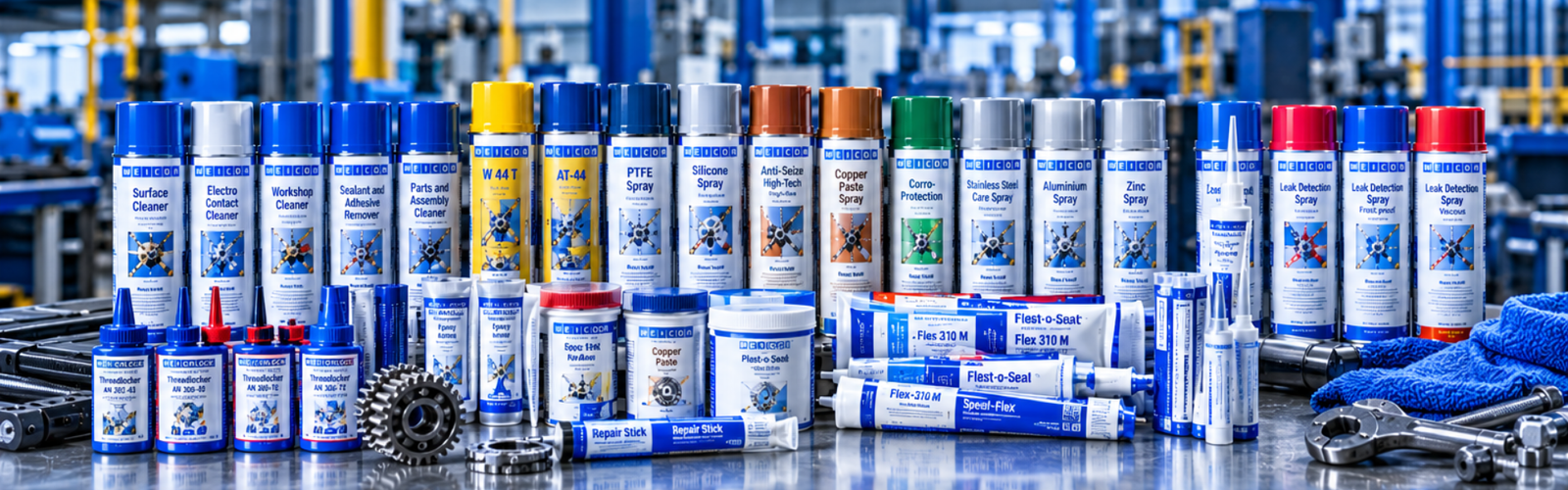
Industrial Maintenance Chemicals Every Factory Should Have
Admin
|
12 Oct 2026
|
11 min read
|
7 views
Industrial Maintenance Chemicals Every Factory Should Have
Industrial maintenance is essential for keeping machinery, production equipment and supporting systems operating reliably.
Factories operate in environments where equipment is continuously exposed to friction, heat, dust, oil, grease, moisture, chemicals and mechanical stress. Without regular maintenance, contamination and wear can gradually affect equipment performance and potentially lead to unplanned downtime.
While preventive maintenance involves much more than chemicals, the right industrial maintenance chemicals can play an important role in cleaning, lubrication, corrosion protection, component maintenance and equipment servicing.
A well-organised maintenance department should therefore have access to a carefully selected range of chemical products designed for different maintenance tasks.
In this guide, we look at the key industrial maintenance chemicals every factory should consider, what they are used for, where they can be applied and how to select the right products.
Why Do Factories Need Industrial Maintenance Chemicals?
Industrial equipment requires regular maintenance to remain in suitable operating condition.
During normal operation, machinery can accumulate:
- Oil
- Grease
- Dust
- Dirt
- Metal particles
- Carbon deposits
- Adhesive residues
- Moisture
- Rust
- Process contamination
Moving components can also experience:
- Friction
- Wear
- Heat
- Corrosion
- Mechanical stress
Maintenance chemicals can support several routine activities, including:
- Cleaning
- Degreasing
- Lubrication
- Corrosion protection
- Electrical contact cleaning
- Rust removal
- Penetrating seized components
- Surface preparation
The goal is not simply to have as many chemicals as possible.
The goal is to have the right product for the right maintenance application.
1. Industrial Degreasers
An industrial degreaser is one of the most useful products in a factory maintenance department.
Machines and components can accumulate oil and grease over time. Heavy contamination can make inspection difficult and may interfere with maintenance work.
Industrial degreasers can be used to help remove:
- Grease
- Oil
- Heavy dirt
- Petroleum-based residues
- Workshop contamination
Common applications
Degreasers can be useful for:
- Machinery
- Engines
- Mechanical components
- Tools
- Workshop equipment
- Industrial equipment
Before selecting a degreaser, always consider the surface being cleaned.
Some formulations may not be appropriate for:
- Certain plastics
- Rubber
- Painted surfaces
- Coatings
- Sensitive components
Always check the manufacturer's technical information.
2. Industrial Cleaning Chemicals
Not every maintenance task requires a heavy-duty degreaser.
General-purpose industrial cleaners can be useful for routine cleaning and removing lighter contamination.
They can help maintain:
- Machine surfaces
- Tools
- Equipment housings
- Work areas
- Metal components
- Production equipment
A factory may therefore benefit from having both:
General-purpose cleaners + Heavy-duty degreasers
This allows maintenance personnel to select a product based on the level and type of contamination.
3. Industrial Lubricants
Lubrication is one of the most important parts of preventive maintenance.
Friction between moving surfaces can contribute to:
- Wear
- Heat generation
- Noise
- Component damage
Industrial lubricants are designed for different applications and operating conditions.
Depending on the machinery, a maintenance department may require:
- General-purpose lubricants
- High-temperature lubricants
- Chain lubricants
- PTFE lubricants
- Silicone lubricants
- Greases
- Penetrating lubricants
The correct lubricant should be selected according to the equipment manufacturer's recommendations.
4. PTFE Spray
PTFE-based sprays can be useful where low-friction performance is required.
PTFE lubricants may be suitable for applications involving:
- Sliding components
- Guides
- Bushes
- Mechanisms
- Plastic components
- Precision assemblies
One advantage of having PTFE spray available is that it provides a specialised option for applications where a general-purpose lubricant may not be ideal.
However, suitability depends on the specific product and application.
5. Silicone Spray
Silicone-based sprays are another useful product for industrial maintenance.
They can be considered for applications involving:
- Rubber components
- Plastic components
- Seals
- Gaskets
- Sliding mechanisms
Silicone sprays can provide lubrication and, depending on the formulation, water-repellent characteristics.
A maintenance department should not automatically substitute silicone spray for every other lubricant.
The correct product depends on:
- Material
- Temperature
- Load
- Movement
- Environmental exposure
- Manufacturer recommendations
6. Penetrating Spray
Maintenance teams frequently encounter seized or difficult-to-move mechanical components.
Penetrating products can help with components affected by:
- Rust
- Corrosion
- Dirt
- Oxidation
- Mechanical seizure
Typical applications include:
- Nuts
- Bolts
- Fasteners
- Hinges
- Mechanical assemblies
Penetrating products are particularly useful during repair and dismantling operations.
It is important to distinguish between a penetrating product and a long-term lubricant. They are not necessarily designed for the same purpose.
7. Contact Cleaner
Factories often contain electrical control systems, sensors, connectors, switches and other electrical components.
Suitable contact cleaners can help remove contamination from compatible electrical contacts.
Applications can include:
- Electrical connectors
- Switches
- Terminals
- Relays
- Control components
A contact cleaner should be selected specifically for the electrical application.
Before using any electrical cleaning product:
- Follow equipment safety procedures.
- De-energise equipment where required.
- Check the product instructions.
- Confirm compatibility.
- Allow appropriate evaporation or drying time where applicable.
8. Corrosion Protection Products
Metal equipment can be vulnerable to corrosion, particularly in environments exposed to:
- Moisture
- Humidity
- Chemicals
- Salt
- Outdoor conditions
Corrosion-protection products can help protect appropriate metal surfaces.
They may be useful for:
- Machinery
- Tools
- Spare components
- Metal assemblies
- Fasteners
- Equipment during storage
Factories located in coastal or humid environments may need to pay particular attention to corrosion prevention.
9. Rust Removal Products
Rust can make maintenance and component removal difficult.
Rust-removal products can assist with suitable applications involving:
- Rusted components
- Metal surfaces
- Fasteners
- Mechanical parts
The correct approach depends on the severity of corrosion and the material involved.
After rust removal, consider whether the surface also requires:
- Cleaning
- Drying
- Lubrication
- Protective treatment
10. Adhesive and Residue Removers
Factories may encounter adhesive residues from:
- Labels
- Tapes
- Packaging
- Manufacturing processes
- Maintenance work
A suitable adhesive remover can help clean affected surfaces.
However, adhesive removers can have different effects on plastics, coatings and painted surfaces.
Always check compatibility before application.
11. High-Temperature Maintenance Products
Industrial equipment can operate at elevated temperatures.
Examples include:
- Ovens
- Heating systems
- Machinery near heat sources
- Industrial processing equipment
Where required, maintenance products should be selected based on the expected operating temperature.
Using an unsuitable lubricant or chemical in a high-temperature environment can result in reduced performance or product degradation.
Always review the manufacturer's stated temperature range.
12. Chain Lubricants
Chains are widely used in industrial machinery and conveyor systems.
Poor lubrication can contribute to:
- Friction
- Noise
- Wear
- Heat
- Premature chain deterioration
Dedicated chain lubricants can be useful for suitable applications.
When selecting a chain lubricant, consider:
- Chain speed
- Operating temperature
- Load
- Dust exposure
- Moisture
- Application method
13. Electrical Cleaning Products
Electrical maintenance often requires products that are specifically formulated for electrical components.
These may include:
- Contact cleaners
- Precision cleaners
- Suitable maintenance sprays
The key consideration is avoiding products that leave unwanted residues or adversely affect sensitive components.
Always select products based on the manufacturer's intended application.
14. Multi-Purpose Maintenance Sprays
A multi-purpose maintenance spray can be useful for general workshop tasks.
Depending on the formulation, these products may provide combinations of:
- Lubrication
- Moisture displacement
- Cleaning
- Penetration
- Corrosion protection
However, a multi-purpose spray should not automatically replace specialised products.
For critical machinery, use the product specifically recommended for the application.
How Many Maintenance Chemicals Does a Factory Need?
There is no universal number.
A small engineering workshop may need a relatively simple maintenance chemical inventory, while a large manufacturing facility may require dozens of specialised products.
The maintenance inventory should be based on:
Equipment
What machinery is being maintained?
Materials
Are components made from:
- Steel?
- Aluminium?
- Stainless steel?
- Plastic?
- Rubber?
- Composite materials?
Environment
Does the facility experience:
- High temperatures?
- Humidity?
- Dust?
- Chemicals?
- Water?
- Outdoor exposure?
Maintenance requirements
What types of maintenance are performed?
- Cleaning
- Lubrication
- Electrical maintenance
- Mechanical repair
- Corrosion prevention
Recommended Basic Factory Maintenance Chemical Kit
For many general industrial maintenance environments, a basic selection could include:
| Product | Primary Purpose |
| Industrial Cleaner | General cleaning |
| Heavy-Duty Degreaser | Oil and grease removal |
| Contact Cleaner | Electrical contact cleaning |
| Penetrating Spray | Loosening seized components |
| PTFE Spray | Low-friction lubrication |
| Silicone Spray | Suitable plastic/rubber applications |
| General Lubricant | General maintenance |
| Chain Lubricant | Chain and conveyor maintenance |
| Corrosion Protection Spray | Metal protection |
| Rust Remover | Corrosion removal |
| Adhesive Remover | Residue removal |
| High-Temperature Lubricant | High-temperature applications |
The actual list should be customised according to the factory's machinery and maintenance procedures.
How to Organise Industrial Maintenance Chemicals
Simply purchasing products is not enough.
A factory should maintain a structured chemical inventory.
Create Product Categories
For example:
Cleaning
- Industrial cleaners
- Degreasers
- Solvents
Lubrication
- General lubricants
- PTFE sprays
- Silicone sprays
- Chain lubricants
Protection
- Corrosion inhibitors
- Protective coatings
Electrical
- Contact cleaners
Mechanical Maintenance
- Penetrating sprays
- Rust removers
This makes it easier for technicians to locate the correct product.
Label and Identify Products Clearly
Every chemical container should remain properly labelled.
Avoid storing chemicals in unidentified containers.
Technicians should be able to determine:
- Product name
- Intended application
- Relevant hazards
- Storage requirements
Follow the manufacturer's instructions and workplace chemical-management procedures.
Maintain Safety Data Sheets
Factories using industrial chemicals should maintain access to the relevant Safety Data Sheets (SDS).
An SDS can provide important information about:
- Hazards
- Handling
- Storage
- PPE
- First aid
- Fire response
- Spill response
- Disposal
- Transport
Workers should know where the relevant SDS information is available.
Don't Use One Chemical for Everything
One of the most common maintenance mistakes is attempting to use a single product for every application.
For example:
Contact cleaner ≠ degreaser
Penetrating spray ≠ long-term lubricant
PTFE spray ≠ silicone spray
Rust remover ≠ corrosion protection
Each product has a specific purpose.
Using specialised products where appropriate can improve maintenance consistency and reduce the risk of unsuitable applications.
Industrial Chemical Compatibility
Before applying a chemical, identify the material.
For example, determine whether the surface is:
- Steel
- Aluminium
- Stainless steel
- Plastic
- Rubber
- Painted
- Coated
Chemical compatibility is particularly important for:
- Seals
- Gaskets
- Plastic components
- Rubber components
- Painted surfaces
- Sensitive electrical equipment
Always follow product-specific compatibility information.
Industrial Maintenance Chemicals and Preventive Maintenance
Industrial maintenance chemicals should form part of a broader preventive maintenance program.
A typical maintenance process can include:
Step 1: Inspect
Identify contamination, wear, corrosion and damage.
Step 2: Clean
Remove dirt, oil, grease and residues using an appropriate product.
Step 3: Inspect Again
Once the component is clean, look for:
- Cracks
- Wear
- Corrosion
- Leaks
- Damage
Step 4: Lubricate
Apply the appropriate lubricant according to equipment requirements.
Step 5: Protect
Where appropriate, apply corrosion protection or other protective products.
Step 6: Record
Document the maintenance activity and products used.
Industrial Maintenance Chemicals for Different Factory Areas
Production Machinery
Common requirements may include:
- Degreasers
- Cleaners
- Lubricants
- Chain lubricants
- Corrosion protection
Electrical Panels and Controls
Depending on the application:
- Contact cleaners
- Suitable precision cleaning products
Conveyor Systems
Potential requirements:
- Chain lubricants
- Bearing lubricants
- Cleaners
- Degreasers
Workshop
Common products include:
- Degreasers
- Penetrating sprays
- Lubricants
- Rust removers
- Adhesive removers
Storage Areas
Potential requirements:
- Corrosion protection
- Cleaning products
- Maintenance lubricants
How to Choose Industrial Maintenance Chemicals
Before purchasing a chemical product, ask:
What is the problem?
Oil, grease, rust, friction, contamination or corrosion?
What is the material?
Metal, plastic, rubber or coated surface?
What conditions will it operate under?
Temperature, moisture, pressure and exposure?
What result is required?
Cleaning, lubrication, penetration or protection?
Is the product compatible?
Check the technical documentation.
Is the product appropriate for the workplace?
Review the SDS, label and applicable workplace requirements.
Common Mistakes Factories Should Avoid
1. Buying only based on price
The cheapest product may not be the most suitable.
2. Using the wrong chemical
Different maintenance tasks require different formulations.
3. Ignoring technical documentation
Always review available product information.
4. Using excessive amounts
More product does not necessarily mean better performance.
5. Mixing chemicals
Never mix products unless compatibility is specifically confirmed.
6. Poor storage
Follow product-specific storage requirements.
7. Not training maintenance staff
Technicians should understand the intended application and safety requirements.
Industrial Maintenance Chemicals in Australia
Australian factories operate across manufacturing, engineering, automotive, food processing, construction and many other industries.
Their maintenance requirements can vary significantly depending on:
- Location
- Climate
- Machinery
- Production processes
- Operating temperatures
- Moisture exposure
- Chemical exposure
When sourcing industrial maintenance chemicals in Australia, businesses should consider product availability, technical documentation, safety information and application suitability.
For specialised applications, technical support from an experienced industrial supplier can help businesses identify suitable products.
Building a Better Factory Maintenance Strategy
A strong chemical maintenance program should focus on prevention rather than reaction.
Instead of waiting for:
- Rust
- Excessive friction
- Seized components
- Heavy contamination
- Electrical contamination
to become serious problems, maintenance teams can incorporate appropriate cleaning, lubrication and protection into scheduled maintenance activities.
This can make maintenance more systematic and predictable.
Frequently Asked Questions
What are industrial maintenance chemicals?
Industrial maintenance chemicals are products used to clean, lubricate, protect and maintain industrial machinery, equipment and components.
What chemicals should every factory have?
A basic maintenance inventory may include an industrial cleaner, degreaser, lubricant, penetrating spray, contact cleaner, corrosion protection product and other specialised chemicals depending on the machinery.
What is the most important industrial maintenance chemical?
There is no single most important chemical. The appropriate product depends on the maintenance task and equipment.
What is an industrial degreaser used for?
Industrial degreasers are designed to remove oil, grease and other heavy contamination from suitable industrial surfaces.
Why do factories need industrial lubricants?
Lubricants can help reduce friction and wear between suitable moving components.
What is penetrating spray used for?
Penetrating products can help loosen seized or difficult-to-move components affected by rust, corrosion or contamination.
What is contact cleaner used for?
Contact cleaners are designed for cleaning suitable electrical contacts and components.
What is corrosion protection spray?
It is a product designed to help protect suitable metal surfaces against corrosion.
Can one maintenance spray replace all other chemicals?
Not necessarily. Different products are formulated for different applications, materials and operating conditions.
How should industrial chemicals be stored?
Storage requirements vary by product. Follow the manufacturer's label and SDS and applicable workplace requirements.
Do maintenance workers need PPE?
PPE requirements depend on the individual chemical and application. Consult the product SDS and workplace risk assessment.
Should industrial chemicals be mixed?
Do not mix chemicals unless the manufacturer specifically confirms that they can be combined.
Conclusion
A well-maintained factory depends on more than machinery and skilled technicians. It also requires the right maintenance products for routine cleaning, lubrication, protection and repair.
A practical industrial maintenance chemical inventory may include:
- Industrial cleaners
- Degreasers
- Lubricants
- PTFE sprays
- Silicone sprays
- Contact cleaners
- Penetrating sprays
- Chain lubricants
- Rust removers
- Corrosion protection products
- Adhesive removers
- High-temperature maintenance products
The exact selection should always be based on the factory's equipment, materials, operating environment and maintenance requirements.
The key principle is simple:
Use the right chemical for the right application, on the right material, under the right conditions.
For Australian factories and industrial businesses looking for industrial maintenance chemicals, technical sprays, lubricants, cleaners and maintenance solutions, Spleca can help you identify products suited to your application.
Need Industrial Maintenance Chemicals?
Looking for reliable maintenance chemicals for your factory or workshop?
Explore Spleca's range of industrial cleaners, degreasers, lubricants, technical sprays, corrosion protection products and other industrial maintenance solutions.
Explore Industrial Chemicals →
Browse Technical Sprays →
View Industrial Lubricants →
Contact Spleca →
Explore Industrial Automation Products
Related Blogs
No Related Blogs