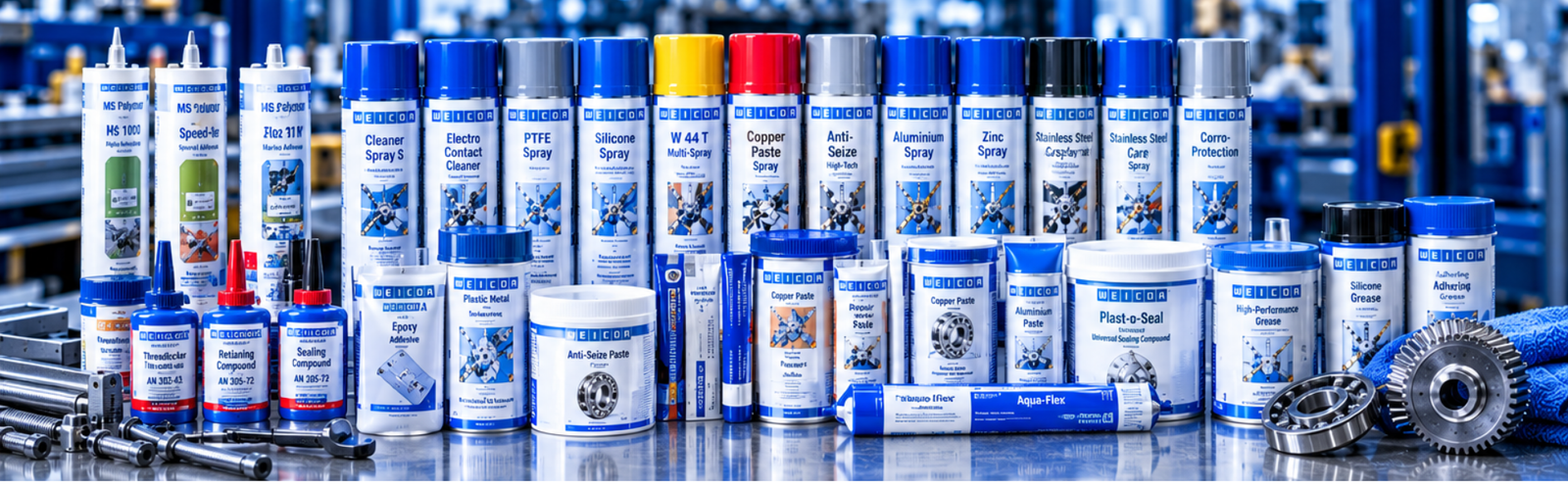
Industrial Chemicals: A Complete Guide
Admin
|
11 Oct 2026
|
11 min read
|
9 views
Industrial Chemicals: A Complete Guide to Types, Applications, Selection & Safe Use
Industrial chemicals play a critical role across modern manufacturing, engineering, maintenance, construction, automotive, electrical, food-processing and industrial production environments.
From cleaning and degreasing machinery to protecting components from corrosion, removing residues, lubricating moving parts and maintaining equipment, the right chemical product can significantly improve operational efficiency and maintenance outcomes.
However, "industrial chemicals" is a broad category.
Different chemicals are designed for completely different purposes. A degreaser cannot simply replace a contact cleaner. A corrosion inhibitor is not the same as a lubricant. A penetrating oil is not necessarily suitable for high-load lubrication.
Choosing the right industrial chemical therefore requires an understanding of:
- The application
- The material being treated
- The type of contamination
- Operating temperature
- Chemical exposure
- Required performance
- Safety requirements
- Environmental conditions
- Manufacturer recommendations
This guide explains the major categories of industrial chemicals, their applications, how to select them and what businesses should consider when purchasing and using chemical products in Australia.
What Are Industrial Chemicals?
Industrial chemicals are chemical products developed or used for industrial, commercial, manufacturing, engineering, maintenance or production applications.
They can be used to:
- Clean machinery
- Remove oil and grease
- Dissolve residues
- Lubricate components
- Protect against corrosion
- Improve equipment performance
- Maintain electrical components
- Remove adhesives
- Protect surfaces
- Clean tools
- Maintain production equipment
- Support manufacturing processes
Industrial chemicals can be supplied in many forms, including:
- Aerosol sprays
- Liquids
- Concentrates
- Gels
- Pastes
- Powders
- Solvents
- Degreasers
- Lubricants
- Cleaning agents
The correct product depends on the specific application.
Why Are Industrial Chemicals Important?
Industrial equipment operates under demanding conditions.
Machines can be exposed to:
- Heat
- Moisture
- Dust
- Oil
- Grease
- Chemicals
- Friction
- Pressure
- Corrosive environments
- Continuous operation
Without proper cleaning, lubrication and protection, components can experience premature wear, contamination and corrosion.
A structured chemical maintenance program can help businesses:
Improve equipment cleanliness
Removing accumulated oil, grease and contaminants can help maintain machinery and components.
Support preventive maintenance
Regular cleaning, lubrication and inspection can help identify problems before they become major failures.
Reduce contamination
Appropriate cleaning products can remove residues that may interfere with equipment operation.
Protect components
Suitable corrosion-protection and lubrication products can help protect surfaces and moving components.
Improve maintenance efficiency
Using purpose-designed technical products can make maintenance tasks more consistent.
Main Types of Industrial Chemicals
Industrial chemicals can be divided into several major categories.
1. Industrial Cleaners
Industrial cleaners are designed to remove dirt, contaminants and residues from equipment and surfaces.
They may be used for:
- Machinery
- Tools
- Metal components
- Workshop equipment
- Production equipment
- Industrial surfaces
2. Industrial Degreasers
Degreasers are designed to remove:
- Grease
- Oil
- Heavy contamination
- Carbon deposits
- Industrial residues
They are commonly used in workshops, manufacturing facilities and maintenance operations.
3. Industrial Solvents
Solvents can dissolve or remove specific substances.
Applications may include:
- Adhesive removal
- Residue removal
- Surface preparation
- Cleaning
- Degreasing
Solvent selection is particularly important because different solvents have different effects on materials.
4. Industrial Lubricants
Lubricants reduce friction and wear between moving components.
Examples include:
- Oils
- Greases
- PTFE lubricants
- Silicone lubricants
- Chain lubricants
- Penetrating lubricants
- High-temperature lubricants
5. Corrosion Protection Products
Corrosion-protection chemicals help protect metal surfaces from environmental factors that can cause corrosion.
They may be used on:
- Machinery
- Tools
- Components
- Fasteners
- Metal surfaces
- Stored equipment
6. Technical Sprays
Technical sprays provide targeted chemical solutions in convenient aerosol formats.
Examples include:
- Contact cleaners
- PTFE sprays
- Silicone sprays
- Multi-purpose maintenance sprays
- Penetrating sprays
- Corrosion protection sprays
Industrial Cleaning Chemicals
Industrial cleaning is one of the most common applications of chemical products.
Machinery can accumulate:
- Oil
- Grease
- Dust
- Metal particles
- Adhesive residues
- Process contamination
- Carbon deposits
The correct cleaning chemical helps remove contamination without unnecessarily damaging the underlying material.
Industrial Degreasers
Heavy-duty machinery often requires specialised degreasers.
Degreasers are particularly useful for removing petroleum-based contamination and heavy grease.
Common applications include:
- Engines
- Machine components
- Workshop equipment
- Manufacturing machinery
- Mechanical parts
- Tools
Before using a degreaser, consider whether the surface is:
- Steel
- Aluminium
- Stainless steel
- Painted
- Plastic
- Rubber
- Coated
Different formulations may have different compatibility characteristics.
Industrial Solvents
Industrial solvents are used when ordinary cleaning agents are not sufficient for a particular residue.
Common applications include:
- Adhesive removal
- Oil removal
- Grease removal
- Surface preparation
- Ink removal
- Residue removal
However, solvent selection requires care.
A solvent that effectively removes contamination may also damage:
- Paint
- Plastic
- Rubber
- Coatings
- Seals
Always check the manufacturer's compatibility information before use.
Industrial Lubricants
Lubrication is fundamental to machinery maintenance.
Moving parts can experience friction and wear when lubrication is insufficient.
Industrial lubricants can be used for:
- Bearings
- Chains
- Gears
- Hinges
- Bushes
- Guides
- Rollers
- Sliding components
- Mechanical linkages
Different applications require different lubrication technologies.
For example, a light technical spray may be suitable for a hinge but inappropriate for a heavily loaded bearing.
PTFE-Based Industrial Lubricants
PTFE is known for its low-friction properties.
PTFE-based lubricants can be suitable for applications involving:
- Sliding components
- Guides
- Bushes
- Precision mechanisms
- Plastic components
- Mechanical assemblies
For more information, businesses can also compare PTFE spray with silicone spray depending on their application.
Silicone-Based Industrial Lubricants
Silicone lubricants are commonly considered for applications involving:
- Rubber
- Plastic
- Seals
- Gaskets
- Sliding mechanisms
They can also provide useful water-resistant characteristics depending on the formulation.
Corrosion Protection Chemicals
Corrosion is a major concern for metal equipment.
Exposure to:
- Moisture
- Humidity
- Salt
- Chemicals
- Oxygen
can contribute to corrosion.
Corrosion-protection products can help protect suitable metal surfaces during operation, storage or transportation.
Applications may include:
- Machinery
- Tools
- Components
- Metal assemblies
- Spare parts
- Outdoor equipment
Penetrating Oils
Penetrating products are designed to help loosen components affected by:
- Rust
- Corrosion
- Dirt
- Oxidation
- Mechanical seizure
Typical applications include:
- Bolts
- Nuts
- Fasteners
- Hinges
- Mechanical assemblies
A penetrating oil should not automatically be treated as a long-term lubricant.
Its purpose may be to assist with freeing a seized or difficult-to-move component.
Contact Cleaners
Electrical and electronic components require specialised cleaning products.
Contact cleaners can be designed to remove:
- Dirt
- Oil
- Residues
- Contamination
from suitable electrical contacts.
Typical applications include:
- Switches
- Connectors
- Relays
- Electrical terminals
- Control equipment
Always ensure the product is specifically intended for the electrical application and follow the manufacturer's instructions.
Industrial Chemicals for Manufacturing
Manufacturing environments use chemical products across many stages of production and maintenance.
Applications may include:
Machinery cleaning
Removing oil, grease and manufacturing residues.
Equipment maintenance
Cleaning and lubricating moving components.
Surface preparation
Preparing surfaces before:
- Painting
- Bonding
- Coating
- Assembly
Corrosion protection
Protecting metal equipment and components.
Electrical maintenance
Cleaning suitable electrical contacts and components.
Industrial Chemicals for Automotive Applications
Automotive workshops commonly use chemical products for:
- Engine cleaning
- Degreasing
- Lubrication
- Contact cleaning
- Rust removal
- Component maintenance
- Adhesive removal
Common technical products include:
- Degreasers
- Contact cleaners
- Penetrating sprays
- Lubricants
- Silicone sprays
- PTFE sprays
The product should always be selected according to the component and manufacturer requirements.
Industrial Chemicals for Electrical Applications
Electrical maintenance requires specialised chemical products.
Suitable products may be used for:
- Contact cleaning
- Residue removal
- Mechanism lubrication
- Protection of suitable components
However, chemical selection is especially important around electrical equipment.
Always:
- De-energise equipment when required.
- Follow electrical safety procedures.
- Use products specifically intended for the application.
- Check whether the product leaves a residue.
- Follow the manufacturer's instructions.
Industrial Chemicals for Maintenance
A well-planned maintenance department may require several different chemical product categories.
A typical maintenance chemical inventory could include:
- Industrial degreaser
- General-purpose cleaner
- Contact cleaner
- Penetrating spray
- PTFE lubricant
- Silicone spray
- Corrosion protection product
- Chain lubricant
- High-temperature lubricant
- Adhesive remover
The exact requirements depend on the facility.
How to Choose the Right Industrial Chemical
Choosing an industrial chemical should begin with the application.
Ask the following questions.
1. What am I trying to achieve?
Are you trying to:
- Clean?
- Degrease?
- Lubricate?
- Protect?
- Remove rust?
- Remove adhesive?
- Clean electrical contacts?
2. What material am I treating?
Identify whether the surface is:
- Steel
- Aluminium
- Stainless steel
- Plastic
- Rubber
- Painted metal
- Coated metal
- Composite
3. What contaminants are present?
For example:
- Oil
- Grease
- Dust
- Adhesive
- Rust
- Carbon
- Electrical residue
4. What environment will the product operate in?
Consider:
- Temperature
- Humidity
- Water
- Dust
- Chemicals
- UV exposure
- Indoor or outdoor use
5. What performance is required?
For example:
- Low friction
- High-temperature resistance
- Water resistance
- Chemical resistance
- Fast evaporation
- Long-term protection
Industrial Chemical Compatibility
Compatibility is one of the most important considerations when using chemical products.
A chemical may be effective against contamination but unsuitable for the surface.
Potentially sensitive materials include:
- Plastics
- Rubber
- Elastomers
- Paints
- Coatings
- Seals
Always review the product's technical documentation before applying it to an unfamiliar material.
For critical applications, conduct a controlled compatibility test where appropriate.
Understanding SDS and Technical Data Sheets
Businesses using industrial chemicals should understand the importance of the Safety Data Sheet (SDS) and technical documentation.
An SDS can provide information about:
- Hazards
- Handling
- Storage
- Personal protective equipment
- First aid
- Fire-fighting measures
- Accidental release
- Disposal
- Transport information
The technical data sheet may provide information about:
- Application
- Temperature range
- Material compatibility
- Drying time
- Performance
- Application method
These documents should be reviewed before using unfamiliar chemical products.
Safe Storage of Industrial Chemicals
Correct storage is an important part of chemical management.
Depending on the product, storage requirements may include:
- Keeping containers properly closed
- Protecting products from heat
- Keeping aerosols away from ignition sources
- Maintaining appropriate ventilation
- Separating incompatible chemicals
- Following manufacturer storage requirements
- Maintaining clear product labels
Businesses should also maintain appropriate chemical inventories and procedures.
Industrial Chemical Safety
Industrial chemicals should always be handled according to the manufacturer's instructions and applicable workplace safety requirements.
Workers may need appropriate PPE such as:
- Safety glasses
- Chemical-resistant gloves
- Protective clothing
- Respiratory protection where required
The required PPE depends on the specific chemical and application.
Never rely on generic PPE assumptions.
Use the product's SDS and workplace risk assessment.
Common Industrial Chemical Mistakes
Using the Wrong Product
A degreaser should not automatically be used where a contact cleaner is required.
Ignoring Material Compatibility
Some chemicals can damage plastics, rubber or coatings.
Overapplying Products
More chemical does not necessarily mean better performance.
Mixing Chemicals
Never mix chemical products unless the manufacturer specifically states that they are compatible.
Ignoring Ventilation
Some solvents and aerosols require appropriate ventilation.
Using Chemicals Near Ignition Sources
Many industrial aerosols and solvents can be flammable.
Always check the product label and SDS.
Industrial Chemicals and Preventive Maintenance
Chemical products should be integrated into a broader preventive maintenance program.
A maintenance program may include:
Inspection
Identify:
- Wear
- Contamination
- Corrosion
- Leakage
- Friction
- Damage
Cleaning
Remove contamination using the appropriate cleaning product.
Lubrication
Apply the correct lubricant according to equipment requirements.
Protection
Use appropriate corrosion-protection products.
Documentation
Record:
- Product used
- Equipment maintained
- Maintenance date
- Technician
- Observations
This creates a more consistent maintenance process.
Industrial Chemicals for Different Industries
Industrial chemical requirements vary by industry.
Manufacturing
Common needs:
- Degreasing
- Machinery cleaning
- Lubrication
- Corrosion protection
- Maintenance sprays
Automotive
Common needs:
- Degreasers
- Contact cleaners
- Penetrating oils
- Lubricants
- Surface cleaners
Electrical & Electronics
Common needs:
- Contact cleaners
- Precision cleaners
- Suitable lubricants
- Maintenance products
Construction
Common needs:
- Surface cleaners
- Lubricants
- Adhesive removers
- Corrosion protection
Engineering
Common needs:
- Degreasers
- Industrial cleaners
- Lubricants
- Penetrating products
- Corrosion protection
Food Processing
Chemical selection requires additional care because products must be appropriate for the particular environment and application.
Where relevant, use products carrying the required food-contact or incidental-contact approvals.
Industrial Chemical Selection Checklist
Before purchasing an industrial chemical, check:
☐ Application
☐ Material compatibility
☐ Contaminant type
☐ Temperature requirements
☐ Chemical resistance
☐ Water resistance
☐ Drying time
☐ Residue characteristics
☐ Safety classification
☐ SDS availability
☐ Technical data
☐ Required certifications
☐ Storage requirements
☐ Manufacturer recommendations
This simple checklist can prevent many product-selection mistakes.
Why Product Quality Matters
Industrial chemical products directly interact with machinery, components and working environments.
A suitable product should provide predictable performance and clear technical information.
When sourcing industrial chemicals, consider:
- Product quality
- Manufacturer reputation
- Technical documentation
- Application suitability
- Availability
- Technical support
- Safety documentation
- Product consistency
Price is important, but it should not be the only purchasing factor.
Industrial Chemicals in Australia
Australian businesses operate across a wide range of demanding environments, from manufacturing facilities and engineering workshops to automotive businesses, construction sites and industrial plants.
When purchasing industrial chemicals in Australia, businesses should consider both technical suitability and local workplace requirements.
This includes:
- Product documentation
- SDS availability
- Safe handling
- Storage
- Transport
- Workplace procedures
- Applicable regulatory requirements
For specialised applications, technical support from an experienced industrial supplier can also help identify the appropriate product.
Building an Industrial Chemical Maintenance Kit
A basic industrial maintenance kit can contain different products for different jobs.
Cleaning
- Industrial cleaner
- Heavy-duty degreaser
- Solvent cleaner
Lubrication
- PTFE spray
- Silicone spray
- General-purpose lubricant
- Chain lubricant
Protection
- Corrosion inhibitor
- Protective spray
Electrical
- Contact cleaner
Mechanical maintenance
- Penetrating spray
- Rust-removal product
The exact selection should be based on the machinery and processes within the facility.
Frequently Asked Questions
What are industrial chemicals?
Industrial chemicals are chemical products used in manufacturing, maintenance, engineering, production and other commercial or industrial applications.
What are industrial chemicals used for?
They can be used for cleaning, degreasing, lubrication, corrosion protection, surface preparation, electrical maintenance and other industrial processes.
What is the difference between an industrial cleaner and a degreaser?
An industrial cleaner is generally intended for removing dirt and contamination, while a degreaser is specifically formulated to remove oils, grease and similar heavy residues. The actual performance depends on the product formulation.
What industrial chemical removes grease?
Industrial degreasers are specifically designed to remove grease and oily contamination. Choose a formulation suitable for the surface being cleaned.
What is an industrial solvent?
An industrial solvent is a chemical substance or formulation used to dissolve or remove particular materials such as oils, adhesives, residues or contaminants.
Are industrial chemicals safe?
Industrial chemicals can be used safely when handled according to their labels, SDS, technical documentation and applicable workplace procedures. Safety requirements vary significantly between products.
What is an SDS?
An SDS, or Safety Data Sheet, provides important information about the hazards, handling, storage, PPE, first aid and other safety considerations associated with a chemical product.
Can industrial chemicals be used on plastic?
Some can, but compatibility varies. Always check the manufacturer's compatibility information before applying a chemical to plastic.
Can industrial chemicals damage rubber?
Yes. Certain chemical formulations can affect rubber and elastomers. Always check compatibility before use.
How should industrial chemicals be stored?
Storage requirements vary by product. Follow the manufacturer's instructions and SDS, including requirements relating to temperature, ventilation, ignition sources and segregation.
Can different industrial chemicals be mixed?
Do not mix chemical products unless the manufacturer specifically confirms compatibility and provides appropriate instructions.
What industrial chemicals should a factory have?
A factory may require cleaners, degreasers, lubricants, contact cleaners, penetrating products and corrosion-protection products, depending on its equipment and processes.
Conclusion
Industrial chemicals are an essential part of modern equipment maintenance, manufacturing and engineering operations.
From industrial cleaners and degreasers to lubricants, technical sprays, solvents, contact cleaners and corrosion-protection products, each chemical has a specific purpose.
The best product is not necessarily the strongest chemical or the cheapest option.
It is the product that is correctly matched to:
Application + Material + Contamination + Environment + Performance Requirements.
By selecting products carefully, reviewing technical documentation and following appropriate safety procedures, businesses can build a more effective and consistent industrial maintenance program.
For Australian businesses looking for reliable industrial chemicals, technical sprays, lubricants, cleaning products and industrial maintenance solutions, Spleca can help you identify products suited to your application.
Need Industrial Chemical Solutions?
Looking for industrial chemicals in Australia?
Explore Spleca's range of industrial chemical products, technical sprays, lubricants, cleaners and maintenance solutions.
Explore Industrial Chemicals →
Browse Technical Sprays →
View Industrial Products →
Contact Spleca's Technical Team →
Explore Industrial Automation Products
Related Blogs
No Related Blogs