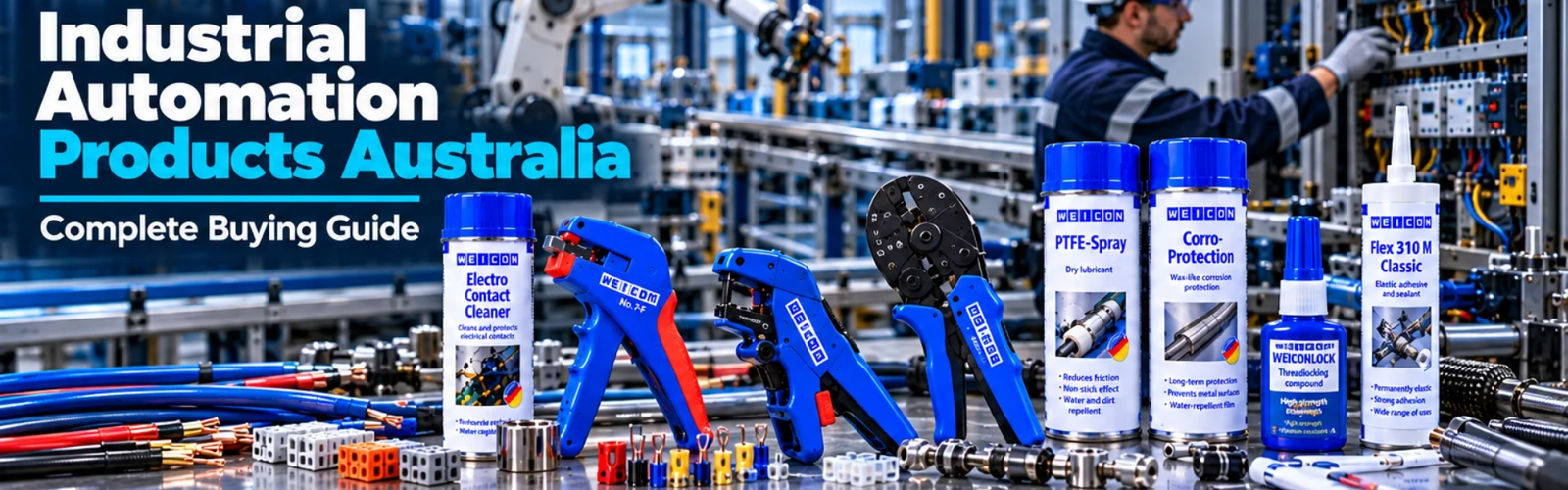
Industrial Automation Products Australia: Complete Buying Guide
Admin
|
22 Oct 2026
|
12 min read
|
52 views
Industrial Automation Products Australia: Complete Buying Guide
Industrial automation has become an essential part of modern manufacturing, engineering and production environments.
Australian businesses across manufacturing, processing, packaging, logistics, mining, food production, infrastructure and engineering increasingly rely on automation to improve operational consistency, productivity, safety and process control.
However, choosing the right industrial automation products in Australia can be challenging.
The market includes thousands of components from different manufacturers, with products designed for specific applications, operating environments and control architectures.
Selecting a component based only on price or basic specifications can create compatibility, reliability and maintenance problems later.
A better approach is to understand the application first and then select products according to technical requirements, environmental conditions, system compatibility and long-term support.
This guide explains the major categories of industrial automation products, what they do, what to consider when purchasing them and how Australian businesses can build reliable automation systems.
What Is Industrial Automation?
Industrial automation refers to the use of control systems, computers, electrical equipment, sensors, software and specialised machinery to control industrial processes with limited manual intervention.
Automation systems can be relatively simple or highly sophisticated.
A basic automated system may use:
- Sensors
- Relays
- Switches
- Controllers
- Motors
- Actuators
A more advanced system may include:
- PLCs
- HMIs
- Industrial networks
- Variable frequency drives
- Servo systems
- Safety systems
- Industrial computers
- Remote monitoring
- Data acquisition
- SCADA systems
The purpose of automation is not simply to remove people from a process.
Modern industrial automation is primarily about creating more consistent, controllable, measurable and efficient industrial operations.
Why Industrial Automation Is Important for Australian Businesses
Australian businesses operate across a wide range of industries and environments.
Manufacturers may need automation systems for production lines, while engineering businesses may require specialised control components for machinery and equipment.
Automation can help businesses achieve:
Improved Process Consistency
Automated systems can execute predefined processes consistently.
Better Productivity
Automation can allow machines to perform repetitive processes efficiently.
Improved Monitoring
Sensors and control systems can provide real-time information about equipment and processes.
Reduced Manual Repetition
Automation can reduce the need for employees to perform repetitive tasks manually.
Improved Process Control
Controllers and monitoring systems can help maintain specific operating conditions.
Better Data Availability
Modern automation systems can collect and communicate operational data.
Improved Scalability
A well-designed automation architecture can make it easier to expand or modify systems.
Major Categories of Industrial Automation Products
Industrial automation is not one single product category.
A complete automation system can involve many different types of components.
Let's look at some of the most important categories.
1. Programmable Logic Controllers — PLCs
A Programmable Logic Controller, commonly known as a PLC, is one of the fundamental components of many industrial automation systems.
A PLC receives information from inputs, processes programmed logic and controls outputs.
A simplified automation sequence may look like:
Sensor → PLC → Logic → Output → Machine Action
PLCs can be used to control:
- Production machinery
- Conveyor systems
- Packaging equipment
- Pumps
- Motors
- Assembly systems
- Material handling equipment
- Process equipment
When selecting a PLC, consider:
- Number of inputs
- Number of outputs
- Digital or analogue requirements
- Communication protocols
- Processing requirements
- Programming environment
- Expansion requirements
- Environmental conditions
- Manufacturer ecosystem
2. Human Machine Interfaces — HMIs
Human Machine Interfaces allow operators to interact with automation systems.
An HMI may display:
- Machine status
- Production information
- Alarms
- Temperature
- Pressure
- Operating parameters
- Fault conditions
- Process information
Operators may also use an HMI to:
- Start equipment
- Stop equipment
- Adjust settings
- Acknowledge alarms
- Monitor processes
When selecting an HMI, consider screen size, resolution, communication compatibility, operating environment and required functionality.
3. Industrial Sensors
Sensors provide automation systems with information about the physical environment.
They can detect characteristics such as:
- Position
- Proximity
- Temperature
- Pressure
- Level
- Flow
- Speed
- Distance
- Light
- Movement
The sensor sends information to the control system, which can then respond according to programmed logic.
For example:
Object detected → Sensor sends signal → PLC processes signal → Machine performs action
4. Proximity Sensors
Proximity sensors are commonly used to detect the presence or position of objects without requiring physical contact.
They can be used in:
- Conveyor systems
- Packaging machines
- Assembly lines
- Material handling
- Automated machinery
Different technologies are available for different applications.
The correct sensor depends on factors such as:
- Detection distance
- Target material
- Environmental conditions
- Installation requirements
- Output type
5. Photoelectric Sensors
Photoelectric sensors use light to detect objects.
They can be useful for:
- Object detection
- Counting
- Position detection
- Conveyor applications
- Packaging systems
- Automated sorting
When choosing a photoelectric sensor, consider detection range, target characteristics, mounting conditions and environmental factors.
6. Temperature Sensors
Temperature monitoring is important in many industrial processes.
Temperature sensors can be used to monitor:
- Machinery
- Processes
- Production equipment
- Motors
- Industrial environments
- Heating systems
Temperature information can be fed into a control system to trigger actions when specific conditions are reached.
7. Pressure Sensors
Pressure sensors are used in applications involving:
- Pneumatic systems
- Hydraulic systems
- Process equipment
- Pumps
- Compressors
- Fluid systems
The appropriate sensor should be selected based on the pressure range, media compatibility, connection requirements and environmental conditions.
8. Industrial Relays
Relays are important components in electrical control systems.
They allow one electrical circuit to control another circuit according to the required application.
Industrial relays may be used for:
- Switching
- Isolation
- Control circuits
- Protection-related applications
- Interface functions
When selecting a relay, consider voltage, current, contact configuration, switching requirements and environmental conditions.
9. Contactors
Contactors are commonly used for switching electrical loads, particularly motors and other high-power equipment.
They can form part of motor control and industrial electrical systems.
When selecting contactors, consider:
- Load type
- Voltage
- Current
- Motor characteristics
- Switching frequency
- Control voltage
- Application requirements
10. Circuit Protection Products
Industrial electrical systems require appropriate protection.
Depending on the system, protection products can include:
- Circuit breakers
- Fuses
- Overload protection
- Surge protection
- Other protective devices
The appropriate protection depends on the electrical design and applicable standards.
Electrical system design and installation should be performed by appropriately qualified professionals.
11. Variable Frequency Drives — VFDs
Variable Frequency Drives, or VFDs, are commonly used to control the speed and operation of AC motors.
They can provide greater control over motor operation and may be useful in applications involving:
- Pumps
- Fans
- Conveyors
- Compressors
- Industrial machinery
When selecting a VFD, consider:
- Motor rating
- Voltage
- Current
- Required speed range
- Control method
- Communication requirements
- Environmental conditions
- Application characteristics
12. Servo Motors and Servo Systems
Servo systems are used when precise control of motion is required.
They can be found in applications such as:
- Robotics
- Packaging
- CNC equipment
- Pick-and-place systems
- Automated assembly
- Precision machinery
Servo systems typically involve coordinated components such as:
- Servo motor
- Servo drive
- Controller
- Feedback system
The correct system depends heavily on the required motion profile and application.
13. Industrial Motors
Motors provide mechanical movement for countless industrial processes.
They can power:
- Conveyors
- Pumps
- Fans
- Compressors
- Machinery
- Material handling equipment
When selecting an industrial motor, consider:
- Power rating
- Voltage
- Speed
- Torque
- Duty cycle
- Mounting arrangement
- Environmental conditions
- Application
Motor selection should be performed according to the actual load and operating requirements.
14. Industrial Switches
Switches are used throughout industrial control and electrical systems.
They can include:
- Push buttons
- Selector switches
- Limit switches
- Emergency stop devices
- Rotary switches
Industrial switches should be selected according to the electrical, mechanical and environmental requirements of the application.
15. Industrial Connectors
Reliable electrical connections are essential for industrial automation.
Industrial connectors can be used to connect:
- Sensors
- Motors
- Controllers
- Control panels
- Cables
- Industrial equipment
When choosing connectors, consider:
- Number of contacts
- Voltage
- Current
- IP rating
- Mechanical requirements
- Environmental exposure
- Connector type
16. Industrial Cables
Automation systems depend on reliable cabling.
Different applications may require specialised cables for:
- Power
- Control
- Sensors
- Communication
- Motors
- Data transmission
Cable selection should consider:
- Voltage
- Current
- Flexibility
- Temperature
- Chemical exposure
- Mechanical movement
- Shielding
- Environmental conditions
17. Cable Preparation Tools
Selecting the correct cable is only part of the installation process.
Technicians also require appropriate tools to prepare cables correctly.
Professional cable preparation tools can support tasks such as:
- Cutting
- Stripping
- Jacket removal
- Cable preparation
- Termination preparation
Using appropriate specialist tools can improve consistency and efficiency during installation and maintenance.
18. Industrial Control Panels
Control panels bring multiple automation and electrical components together into a structured system.
A control panel may contain:
- PLC
- Power supplies
- Relays
- Contactors
- Circuit protection
- Terminal blocks
- Communication equipment
- Drives
- Control components
Good panel design should consider:
- Component arrangement
- Heat management
- Cable routing
- Accessibility
- Protection
- Maintenance
- Identification
- Future expansion
19. Power Supplies
Automation components often require controlled DC power.
Industrial power supplies convert available electrical power into the appropriate voltage required by control components.
They may power:
- PLCs
- Sensors
- HMIs
- Relays
- Communication devices
- Control equipment
When choosing a power supply, consider:
- Input voltage
- Output voltage
- Current capacity
- Efficiency
- Protection
- Environmental requirements
- Redundancy requirements
20. Terminal Blocks
Terminal blocks provide organised connection points within control panels and electrical systems.
They can make wiring more structured and easier to maintain.
Depending on the application, terminal blocks may be used for:
- Power distribution
- Signal connections
- Control wiring
- Sensor connections
- Electrical interfaces
21. Industrial Communication Products
Modern automation systems increasingly rely on communication between machines, controllers and other devices.
Industrial communication technologies allow equipment to exchange information.
Depending on the system, communication may involve:
- Ethernet
- Industrial Ethernet
- Serial communication
- Fieldbus systems
- Wireless communication
The correct technology depends on the existing automation architecture and equipment compatibility.
22. Safety Automation Products
Industrial automation must also consider machine and operator safety.
Safety-related automation systems can include specialised:
- Safety relays
- Emergency stop devices
- Safety switches
- Light curtains
- Safety controllers
- Interlocking systems
Safety systems should be designed and implemented according to applicable requirements and by suitably qualified professionals.
23. Industrial Automation Software
Hardware is only one part of an automation system.
Software is required to program, configure, monitor and manage many automation components.
Depending on the system, software may be used for:
- PLC programming
- HMI configuration
- Drive configuration
- Data monitoring
- System diagnostics
- Process visualisation
Software compatibility should therefore be considered when selecting automation hardware.
How to Choose Industrial Automation Products
The most important rule when purchasing automation products is simple:
Start with the application, not the product.
Before selecting a component, understand what the system needs to achieve.
Step 1: Define the Application
Ask:
- What machine or process is being automated?
- What needs to be controlled?
- What information needs to be measured?
- What outputs are required?
Step 2: Identify the Required Inputs and Outputs
Determine:
- Digital inputs
- Digital outputs
- Analogue inputs
- Analogue outputs
- Communication requirements
This is particularly important when selecting PLCs and controllers.
Step 3: Check Compatibility
Make sure components can communicate and operate together.
Check:
- Voltage
- Current
- Communication protocol
- Software compatibility
- Physical dimensions
- Connector types
- Mounting requirements
Step 4: Consider the Environment
Australian industrial environments can vary considerably.
Equipment may operate in:
- Workshops
- Manufacturing facilities
- Outdoor environments
- Warehouses
- Processing facilities
- Dusty environments
- High-temperature areas
- Humid environments
Consider:
- Temperature
- Moisture
- Dust
- Chemicals
- Vibration
- Corrosion
Step 5: Consider Future Expansion
Don't design an automation system only for today's requirements.
Where practical, consider whether the system may need:
- Additional sensors
- More I/O
- More machines
- Additional communication
- Increased production
- Remote monitoring
A little planning can make future upgrades easier.
Common Mistakes When Buying Automation Products
Buying Only Based on Price
The cheapest component may not be the most suitable solution.
Consider the total cost of ownership, compatibility, reliability, support and availability.
Ignoring Environmental Conditions
A component designed for a controlled indoor environment may not be appropriate for harsh industrial conditions.
Choosing Incompatible Components
Communication, voltage, connectors and software compatibility should be checked before purchasing.
Not Considering Spare Parts
If a critical component fails, availability of replacements can affect downtime.
Ignoring Technical Support
Complex automation systems often require technical knowledge during installation, configuration and troubleshooting.
A supplier who understands the products can add significant value.
OEM vs Generic Automation Components
One of the decisions businesses may face is whether to purchase products from established manufacturers or use generic alternatives.
The correct choice depends on the application.
Consider:
- Technical specifications
- Compatibility
- Reliability requirements
- Certification
- Product availability
- Manufacturer support
- Spare parts
- Warranty
- Total cost of ownership
For critical industrial applications, technical suitability should take priority over simply choosing the lowest initial price.
Industrial Automation Products for Different Industries
Automation requirements vary significantly between industries.
Manufacturing
Automation products can support:
- Production lines
- Assembly
- Material handling
- Quality control
- Packaging
Food and Beverage
Applications can include:
- Processing
- Packaging
- Conveyors
- Temperature control
- Process monitoring
Packaging
Automation can support:
- Filling
- Labelling
- Sealing
- Sorting
- Product handling
Mining
Automation can support:
- Material handling
- Monitoring
- Processing
- Equipment control
Warehousing
Automation products can be used in:
- Conveyors
- Sorting
- Material handling
- Automated storage systems
Engineering
Automation components can be used for:
- Machine building
- Test equipment
- Custom machinery
- Control systems
Industrial Automation Products Australia: What to Look For in a Supplier
When choosing an industrial automation supplier in Australia, consider more than product range.
Look for:
Product Availability
Can the supplier consistently source the products you need?
Technical Knowledge
Can they help identify the right component for the application?
Genuine Products
Can they provide authentic products and appropriate documentation?
Product Range
Can they supply multiple automation and industrial categories?
Customer Support
Can you obtain assistance before and after purchase?
Industry Experience
Does the supplier understand industrial applications?
Delivery
Can products be delivered efficiently within Australia?
Why Choose Spleca for Industrial Automation Products?
Spleca supplies industrial automation products, electrical components, technical products, WEICON solutions, cable preparation tools and industrial products to customers across Australia.
Our goal is to make industrial product sourcing simpler by bringing together a range of products for automation, electrical, engineering and maintenance applications.
Spleca supports businesses looking for products for:
- Industrial automation
- Manufacturing
- Electrical systems
- Engineering
- Industrial maintenance
- Machine building
- Production equipment
- Automation projects
Whether you are sourcing a single component or developing a larger automation system, our team can help you identify suitable products based on your application.
Industrial Automation Buying Checklist
Before placing an order, review the following:
- Application clearly defined
- Required specifications identified
- Voltage confirmed
- Current requirements confirmed
- Inputs and outputs identified
- Communication requirements checked
- Physical dimensions confirmed
- Connector compatibility checked
- Environmental conditions reviewed
- Operating temperature checked
- IP rating considered
- Manufacturer compatibility confirmed
- Spare parts considered
- Technical documentation available
- Installation requirements understood
- Future expansion considered
- Supplier support available
Frequently Asked Questions
What are industrial automation products?
Industrial automation products are electrical, electronic, mechanical and control components used to automate industrial processes and machinery.
What are the most common industrial automation products?
Common products include PLCs, HMIs, sensors, relays, contactors, drives, motors, power supplies, control panel components, cables, connectors and safety products.
Where can I buy industrial automation products in Australia?
Industrial automation products can be purchased from specialist industrial automation suppliers and distributors that provide genuine products, technical information and application support.
How do I choose the right automation component?
Start with the application and determine the required electrical, mechanical, communication and environmental specifications before selecting a product.
What is a PLC used for?
A PLC receives inputs, processes programmed logic and controls outputs. It is commonly used to automate machinery and industrial processes.
What is an HMI?
An HMI, or Human Machine Interface, allows operators to monitor and interact with industrial machinery and automation systems.
What are industrial sensors used for?
Sensors detect physical conditions such as temperature, pressure, position, proximity, level, flow and movement and provide information to automation systems.
Why is product compatibility important?
Automation components must be able to communicate and operate correctly within the system. Compatibility should be checked before purchasing.
Are industrial automation products suitable for all environments?
No. Components have different environmental ratings and operating limits. Temperature, moisture, dust, chemicals, vibration and other conditions should be considered.
Why should I buy from a specialist automation supplier?
A specialist supplier can provide access to a broader range of products along with technical information and application guidance.
Conclusion
Industrial automation is transforming the way Australian businesses manufacture, process, move and manage products.
But successful automation depends on choosing the right components for the application.
From PLCs, HMIs and industrial sensors to drives, motors, relays, contactors, control panels, cables, connectors, power supplies and safety components, every part of an automation system contributes to its overall performance.
The best buying decision is therefore not necessarily the cheapest product.
It is the product that provides the right combination of technical suitability, compatibility, reliability, availability, support and long-term value.
Before purchasing industrial automation products, clearly define the application, identify the required specifications, consider the operating environment and confirm compatibility with your existing system.
For Australian businesses, working with an experienced industrial automation supplier can make this process significantly easier.
Spleca supplies industrial automation products and industrial solutions across Australia, supporting manufacturers, engineers, OEMs, maintenance teams and industrial businesses with products and technical assistance.
Looking for the right industrial automation product for your application? Contact Spleca today.
Explore Spleca
Browse Industrial Automation Products →
Explore Electrical Products →
Explore WEICON Products →
View Technical Sprays →
Contact Spleca →
Explore Industrial Automation Products